Blog
How a childbirth educator built a 15-year business one handout at a time
Julie Olsen has been a Lamaze Certified Childbirth Educator for over 20 years. When she couldn't find teaching materials that met her standards, she made her own. Fifteen years and 350,000 print copies later, Plumtree Baby is the go-to resource for birth professionals who want modern,

Julie Olsen has been a Lamaze Certified Childbirth Educator for over 20 years. When she started teaching, she was disappointed by the materials available to help her do the job well. So she made her own.
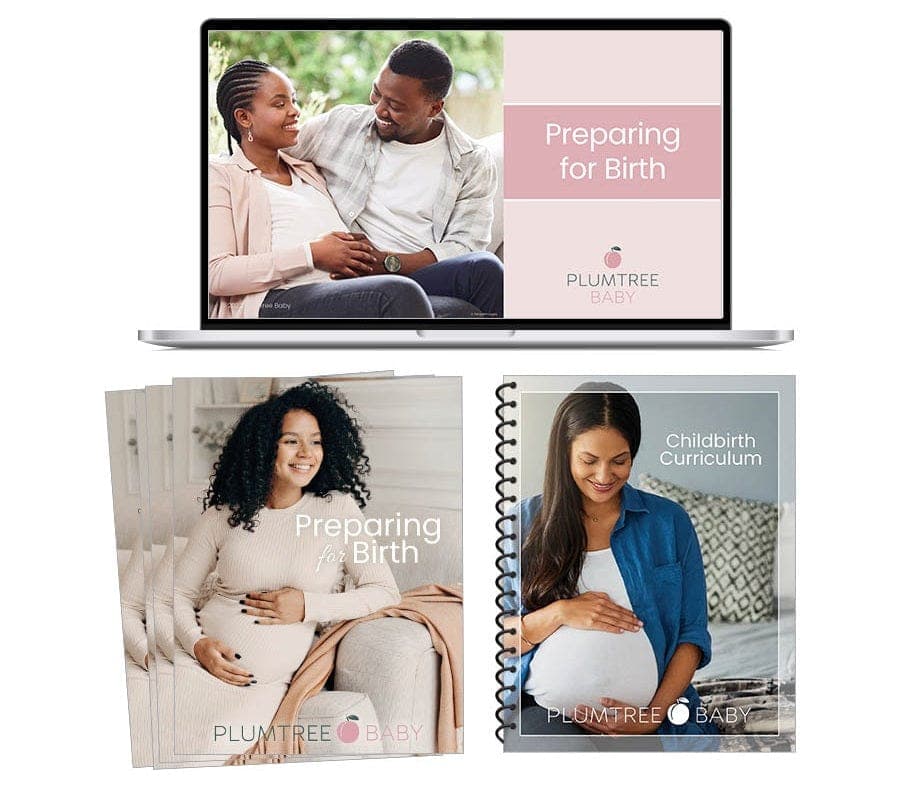
That decision, made 15 years ago with a co-founder and a small print run, turned into Plumtree Baby, a company that has sold over 350,000 print copies of its books and now provides perinatal education resources to hospitals, clinics, doulas, and educators around the world. The product line includes everything from parent guidebooks and branded handouts to full teaching curriculums, including an official partnership with Lamaze International.
We sat down with Julie to talk about building a niche publishing business without debt, the power of custom branding, and why she never let the company take over her life.
Filling a gap nobody else was filling

Julie didn't set out to start a company. She set out to teach childbirth classes and couldn't find materials that worked.
"I was just really disappointed in the materials that were available to help me teach," she says. "I had to reinvent the wheel, come up with a curriculum, write everything myself."
She joined forces with a couple of other educators, printed some materials, and waited to see if anyone else wanted them. The first orders were small. A $20 sale here, a few weeks of silence there. Growth was slow, and that was fine.
The real turning point was showing up in person. Plumtree Baby exhibited at the Lamaze conference, one of the biggest events in childbirth education. "They put us across from our competitors across the aisle, and they were just giving us dirty looks the whole time," Julie recalls. That event put them in front of a few hundred potential customers, and sales picked up from there.
Who buys perinatal education materials
If you've never thought about the market for childbirth education, it's larger than you'd expect. Plumtree Baby's primary customers are businesses: hospitals, clinics, health departments, doulas, and educators working with families from pregnancy through the first year after birth.
"We provide materials for both the health professionals and educators that are working with families, but also for families themselves," Julie explains. The resources cover a wide range, from labor preparation and birth options to breastfeeding, newborn care, and postpartum recovery.
The content exists to fill a real gap. "There's just so much out there and so much bad information," Julie says. Plumtree Baby positions itself between the anxiety-inducing chat groups and the incomplete advice families get from rushed medical appointments. Their materials are evidence-based, professionally designed, and written to be understood by real people going through one of the most significant transitions of their lives.
About 85% of Plumtree Baby's sales come from physical printed materials. Digital products make up a smaller portion of revenue for now, but the digital side of the catalog includes teaching aids, PowerPoint presentations, and downloadable resources that educators can use in virtual or in-person settings.
The custom branding play that keeps customers coming back

The business decision that changed Plumtree Baby's trajectory was offering custom-branded resources. Hospitals, clinics, and education organizations can put their own logo, colors, and messaging on Plumtree Baby's materials. It's white labeling, and it turned out to be the company's most powerful retention tool.
"We get about 95% reorders," Julie says. "Once they brand their resources, they come back and buy over and over."
The team debated whether to keep offering custom work. It's labor-intensive, there's a meaningful minimum order, and new customer acquisition for the branded line is slower than for off-the-shelf products. Then Julie ran her 470+ customer reviews through AI to find patterns, and customization emerged as one of the top five reasons people chose Plumtree Baby.
"Even if they don't buy custom, because maybe they're not at that quantity yet, they still find us from wanting to have that option," she says. "It's basically helping them develop their own unique business model. If they can put their logo on their resources, it helps with their credibility, growing their business, marketing their business."
Some of their biggest accounts are major national organizations using Plumtree Baby's materials under their own brand. The Lamaze partnership is the most visible example: Plumtree Baby produces the official Lamaze curriculum, parent guidebooks, and teaching PowerPoints, all co-branded with Lamaze International.
Running a small business without debt
Julie runs Plumtree Baby with a team of five. Growth has been consistent every year since the company started, but it's been intentionally organic. She's never taken on debt to fund inventory or expansion.
"I just don't want to have any of that stress or any of the risks involved with taking out a huge loan and having to figure out how I'm going to repay that," she says.
The temptation is constant. "Shopify does that a lot. I get it from PayPal. All these different organizations that are basically just trying to push money on you. And it seems really attractive because you're like, oh, I do need to buy more inventory."
Her approach to cash flow is the same approach she takes to everything else in the business: disciplined, patient, and planned. She'd rather grow slower and keep the business debt-free than take a shortcut that introduces risk.
The 90-day planner that runs everything
Julie's organizational system is deceptively simple. She uses a physical 90-day planner that she designed herself after buying and rejecting 12 different commercial planners.
The process works like this: in October, she maps out the big-picture goals for the coming year. A couple of weeks before each quarter starts, she breaks those annual goals into a focused 90-day plan. Then she sets tiers.
"These are the three big things I want to accomplish. But if I did get those done, what's the next level I could do?" she explains. "Sometimes I'll find I check off a task 30 days in, and I'm like, okay, well then what can I do to further that?"
Every day, she picks the top two things she wants to get done. At the end of each week, she reviews what actually happened. What got done, what didn't, why. Then she plans the next week.
"That is just essential, because otherwise it's so easy to get distracted by all the little fires you have to put out," she says. "All those customer requests that come in that seem urgent can just really keep you off of getting work done on the business and growing the business."
She also keeps a monthly PowerPoint deck for herself that tracks wins, sales, and progress. The print planner feeds the digital record. It's a simple system, but after 15 years of running a business, she's found that simple systems are the ones that actually get used.
The planner she designed for herself might become a product someday. She hasn't listed it for sale yet, but she's thinking about it.
Building a business without sacrificing family
Julie started Plumtree Baby when her kids weren't even in elementary school. Both are now in college. The business grew around her family, not the other way around.
"It was really important to me that I never missed out on any of those opportunities to be with them, to go to sports, to go to functions," she says. "I was never willing to give that up."
Teaching childbirth classes worked well with parenthood. The classes were evenings and weekends, so she and her husband could switch off on childcare. When the kids got older and she stopped teaching to focus full-time on the business, the growth accelerated, but the priority didn't change.
"I always made it a priority of not letting the business rule my life. And if that meant a little slower growth or a little bit less got accomplished, I was okay with that."
She's aware that this runs counter to the dominant startup narrative. "There's a very masculine version of success, which is like you work all the time, you're working at night," she says. "I just don't want to do that. I had no interest in that."
The flexibility of working from home has made it possible, though she's the first to admit it's not always clean. "My husband and I both just work from home, and we're doing family stuff mixed together with work all at once. Sometimes that's not the best, but it also gives you a lot of flexibility."
A partnership that ended as a gift
One of the best things that happened to Plumtree Baby started as one of the worst. Julie originally co-founded the company with a partner, splitting everything 50/50.
"She thankfully couldn't cut it, didn't want to do it anymore, and sold me her half of the business for $10," Julie says. At the time, the company had some debt, and taking on full ownership was scary. All of the responsibility shifted onto Julie's shoulders overnight.
In hindsight, it was the smartest thing that could have happened. "There's a lot of freedom in being the one that makes the decision, right or wrong," she says. "You get to decide, and you get to take action quickly. You don't have to run it by committee."
She still gets input from her team and her network, but the final call is always hers. "There's no conflict with the decision itself because it's my decision, so I'm usually comfortable with it."
What's next for Plumtree Baby
The digital side of the business is growing. Plumtree Baby uses SendOwl to deliver their digital products through their Shopify store, and the integration has worked well enough that they haven't looked at alternatives in 14 years.
Julie's biggest open challenge is finding the right web development partner. "There's a lot of stuff that's constantly changing about Shopify and tech platforms in general and how they integrate with each other," she says. "Somebody who knows what they're doing would be a really valuable partner that I really haven't found."
She's tried different freelancers and agencies, but the relationships haven't stuck. The ideal partner would understand that Plumtree Baby doesn't need custom everything. There are good out-of-the-box solutions that just need smart customization. "We don't need to reinvent the wheel," she says. "We just need someone reliable who will show up when it matters."
After 15 years, 350,000 books, and a Lamaze partnership, Julie's approach to business remains the same as it was on day one: make excellent materials, grow at a pace that respects the rest of your life, and never take on debt to get there faster.
Learn more about Plumtree Baby and explore their childbirth education resources.
SendOwl makes selling digital products simple. Upload your files, set your prices, and share links anywhere you connect with your audience. Get started selling digital products for free today.

Dani is the GM of SendOwl.
community
Join our newsletter for the latest tips, updates,
and exclusive offers to supercharge your digital product sales.